Pet care
Cat Hiding More Than Usual? Here's What It Might Mean
Why cats hide when something's wrong, and how to tell normal alone-time from a sign worth watching.
Cats disappear for stretches of the day as a matter of course - under the bed, behind the couch, on top of a closet shelf. Most of the time it means nothing at all. But hiding is also one of the clearest signals a cat gives when something’s actually wrong, which makes the “is this normal or not” question genuinely tricky.
Why Cats Hide When They’re Unwell
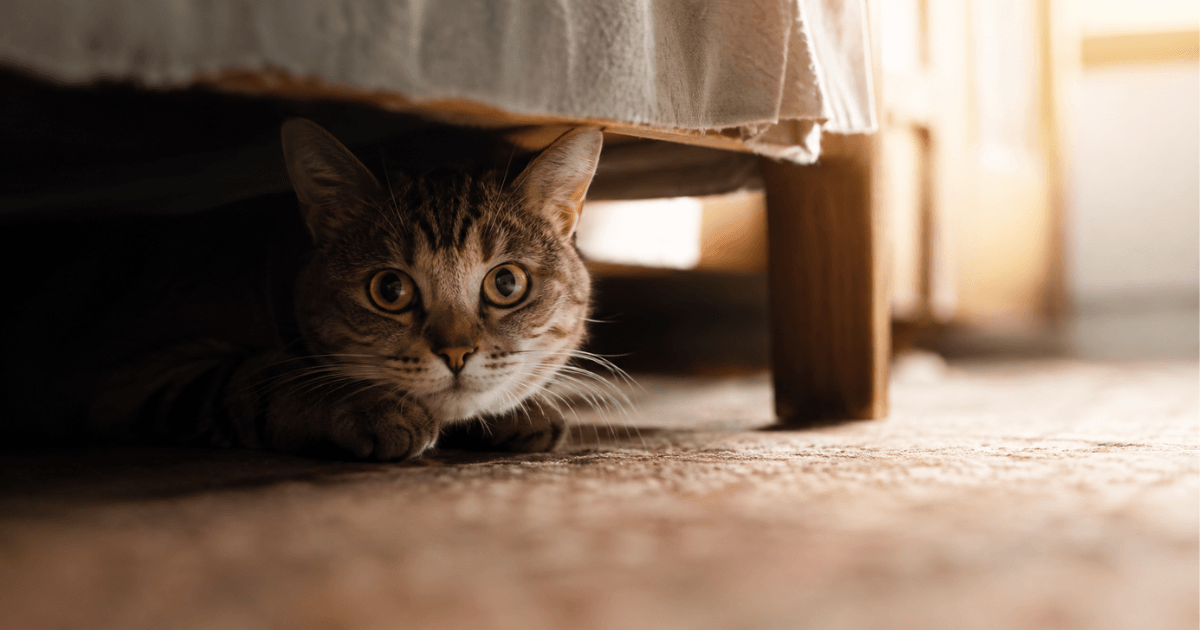
Cats are both predators and prey in the wild, and that instinct hasn’t gone anywhere. Showing weakness or discomfort openly would make a wild cat a target, so the instinct to disappear and go quiet when something’s off is deeply built in. A cat that’s hurting doesn’t limp around the living room looking for sympathy - it goes somewhere small, dark, and out of sight.
That instinct is exactly why hiding is worth paying attention to as a category of behavior, even though most individual instances are completely normal.
Normal Hiding vs. Concerning Hiding
The difference usually isn’t the hiding itself, it’s the pattern around it:
- Normal hiding happens in short stretches, your cat still comes out to eat, use the litter box, and greet you at some point in the day, and it often tracks with something explainable - a loud noise, a visitor, a change in routine.
- Concerning hiding lasts unusually long, comes with skipped meals or litter box avoidance, and doesn’t let up even once things around the house are calm again.
A cat who hides for an afternoon after the vacuum comes out is being a cat. A cat who hasn’t come out to eat in a day, or who’s hiding and also seems reluctant to move, is telling you something different.
What Else to Watch For Alongside Hiding
Hiding rarely shows up completely alone when something’s actually wrong. It’s worth checking whether it’s paired with any of the following: a change in appetite, using the litter box less (or outside it), reduced grooming, or reluctance to be touched or picked up. Any of these alongside increased hiding is a stronger reason to call your vet than hiding by itself.
When to Just Let Them Be
Not every hiding spell needs intervention. New environments, new pets, loud households, or simply a cat who’s naturally more reserved can all explain a lot of quiet, low-key hiding. Forcing a cat out of a hiding spot to “check on them” often adds stress rather than helping, so a gentle check-in from a distance is usually enough unless something else feels off.
Because the real signal is the pattern over time rather than any single afternoon, it helps to have somewhere to note what you’re noticing. PawCare AI’s AI health coach lets you describe behavior changes like this and think through whether it’s worth a vet visit, without needing to remember every detail from memory a week later.
Frequently asked questions
How long is too long for a cat to be hiding?+
My cat always hides when guests come over - is that normal?+
Should I pull my cat out of their hiding spot to check on them?+
The bottom line
Hiding is one of the few honest signals cats give when something’s wrong, precisely because they’re built to mask everything else. Pay attention to the pattern, not the single afternoon, and when hiding comes with other changes, it’s worth a call rather than a wait.
Keep reading

Aug 17, 2026
Why Does My Dog Keep Scratching? Common Causes Explained
The most common reasons behind persistent dog scratching and how to tell when it's time to call the vet.
Aug 14, 2026
Decoding Your Dog's Body Language: A Health Perspective
How to read your dog's posture and body language for early signs of pain or discomfort, not just mood.
Aug 7, 2026