Weight Tracking
How to Tell if Your Cat Is Overweight: 5 Checks at Home
If you're wondering how to tell if your cat is overweight, you can start with a few simple checks at home. Look at your cat's ribs, waist, overall body shape, and how those features appear together.
You don’t need to become an expert overnight, and you don’t need to judge your cat based on one photo or one body position. The goal is simply to get a better picture of your cat’s overall body condition and notice changes that may be worth discussing with your veterinarian.
Quick Answer: How to Tell if Your Cat Is Overweight
A cat carrying extra weight may have ribs that are harder to feel, little visible waist when viewed from above, and a rounder overall body shape.
But no single sign tells the whole story.
A better approach is to use several checks together:
- Feel around the ribs.
- Look for a waist from above.
- Check the body shape from the side.
- Avoid judging weight by the belly alone.
- Pay attention to changes in movement, grooming, and weight over time.
Here are five simple checks to start with.
1. Can You Feel Your Cat’s Ribs?
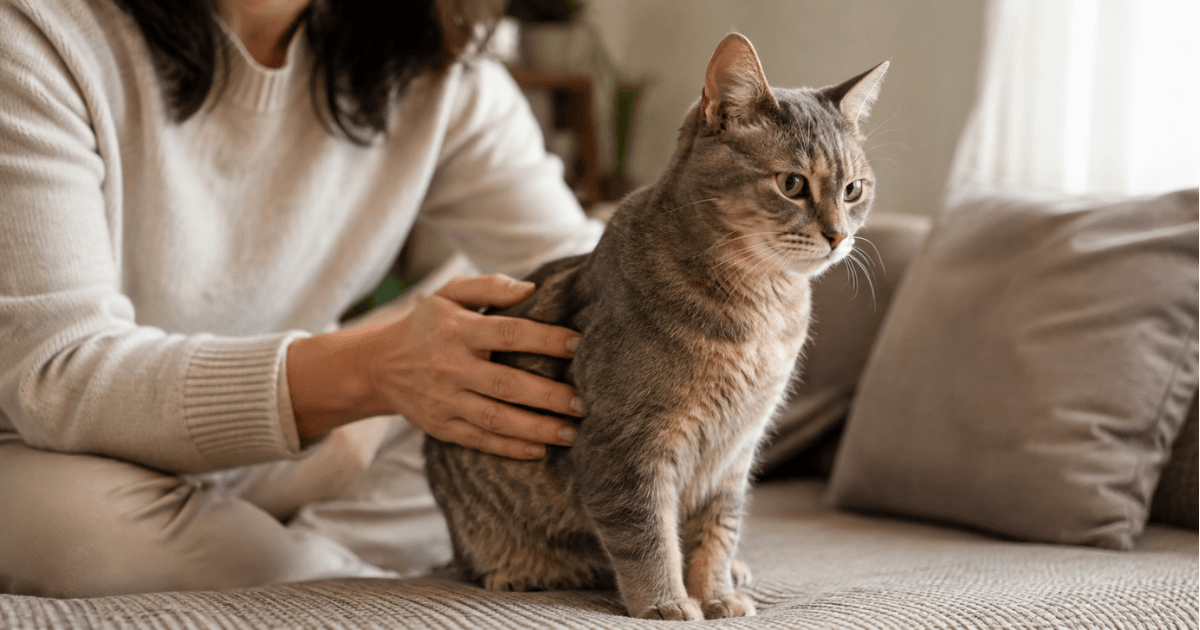
Gently run your hands along your cat’s rib area.
You should be able to feel the ribs beneath the skin and normal tissue. If you have difficulty feeling them because there seems to be a thicker layer of tissue over the rib area, your cat may be carrying extra body fat.
At the same time, don’t expect your cat’s ribs to feel sharply visible. A very prominent rib cage can also indicate that a cat is too thin.
The goal is not to judge one body part in isolation. This check works best when combined with the waist and side-profile checks below.
2. Does Your Cat Have a Visible Waist?
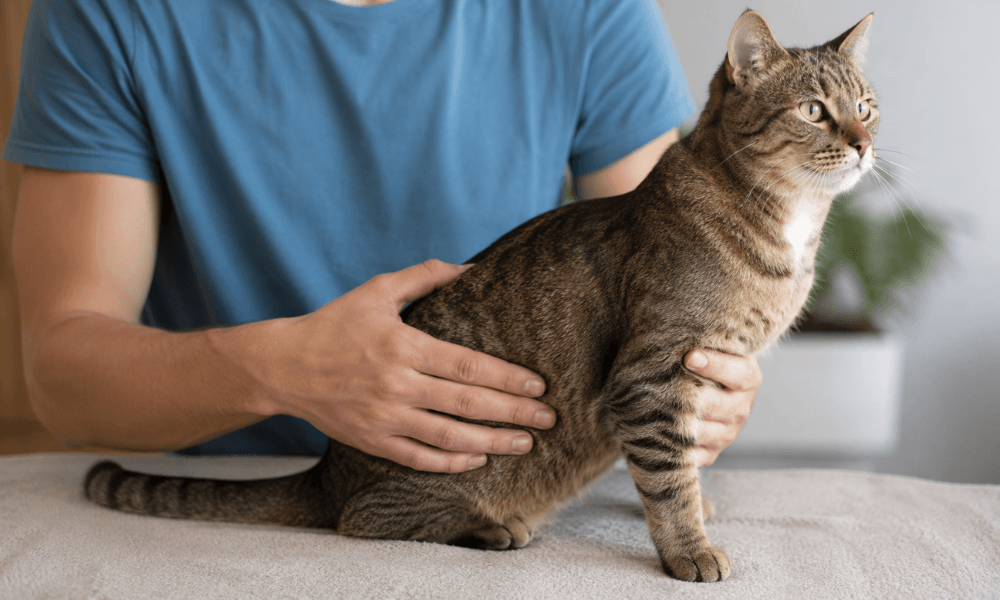
Now stand above your cat and look down toward the body.
Look for some narrowing behind the rib cage before the hips. Depending on your cat’s build, breed, and coat, this may be subtle rather than dramatic.
If the body appears equally wide or very rounded from the chest through the hips, that can be one sign that your cat is carrying extra weight.
Again, this is not a diagnosis by itself. Long fur, posture, and natural body shape can all change how a cat looks.
The best approach is to compare what you see with what you can feel around the ribs and what the body looks like from the side.
3. What Does Your Cat Look Like From the Side?
Look at your cat while they are standing naturally.
Try not to judge them while they are stretching, crouching, curled up, or lying down. Different positions can make the same cat look completely different.
Instead, look at the overall outline of the body.
A gradual change in the abdominal area can be easier to notice when you occasionally compare your cat’s standing body shape over time.
This is also why a single photo is rarely enough to decide whether a cat is overweight.
4. Does a Hanging Belly Mean Your Cat Is Overweight?
Not necessarily.
Many cat owners notice a loose or hanging area of skin and tissue around the lower abdomen and immediately assume it means their cat is overweight.
The better question is:
What does your cat’s overall body condition look and feel like?
Check the ribs, waist, and body profile together instead of using the belly alone as your answer.
If you want a more detailed way to think about overall body shape, our guide to understanding your pet’s body condition score can help you look at the bigger picture.
5. Are Weight Changes Affecting Activity or Grooming?
Changes in activity or grooming can sometimes happen alongside weight changes.
For example, you may notice that your cat seems less interested in jumping, moving around, or reaching certain areas while grooming.
But these signs do not automatically mean that weight is the cause.
Cats can change their activity or grooming habits for many reasons. If you notice a meaningful or persistent change, it is worth discussing with your veterinarian rather than assuming it is simply because your cat is getting heavier.
This is especially important for older cats, where senior pet health changes should not automatically be dismissed as “just getting older.”
Why Does My Cat Look Fat When Lying Down?
A cat can look much wider or rounder when lying down than when standing.
Posture, fur, loose skin, and the way the body relaxes can all change how your cat appears in a particular position.
That means a single pose is not a reliable way to decide whether your cat is overweight.
Instead, check your cat when standing naturally and combine what you see with the rib and waist checks.
If your cat’s body shape has changed noticeably over time, or the change seems sudden, it’s better to ask your veterinarian rather than assuming it is normal weight gain.
What to Do If You Think Your Cat Is Overweight
If several of the checks above make you concerned, don’t panic and don’t try to make major changes based only on one at-home observation.
A useful next step is to discuss your cat’s body condition and weight with your veterinarian.
Your vet can help you understand whether your cat’s current body condition is a concern and what changes, if any, would be appropriate.
It can also help to bring an organized record of your cat’s recent weight history and health information to the appointment. You can use our guide on how to prepare for your pet’s annual wellness exam to make sure you have the important information ready.
Keep an Eye on Your Cat’s Weight Over Time
One check gives you a snapshot. Tracking your cat’s weight over time can make gradual changes easier to notice and give you a clearer record to discuss at future vet visits.
Track Your Pet’s Health with PawCare AI
Frequently asked questions
How can I tell if my cat is overweight?+
Should I be able to feel my cat's ribs?+
Does a hanging belly mean my cat is overweight?+
Why does my cat look fat when lying down?+
The Bottom Line
The best way to tell if your cat may be overweight is to look at the ribs, waist, and overall body shape together-not just one feature or one photo.
Check the ribs. Look for a waist. Look at the overall body shape from the side. Pay attention to meaningful changes over time.
And if you’re unsure, a veterinarian can give you a more complete assessment.
Tracking your cat’s weight can also make slow changes easier to notice. What is difficult to see day to day can become much clearer when you have a record to look back on.
Keep reading
Aug 4, 2026
Pet Body Condition Score: 1-9 Chart for Dogs and Cats
Learn how to use the 1-9 pet body condition score to assess dogs and cats, spot underweight or overweight signs, and monitor healthy body condition.
Jul 31, 2026
Dog Weight Chart by Breed: Healthy Weights for 50+ Breeds (2026)
Exact healthy weight ranges for 50+ dog breeds. Identify if your dog is overweight with vet-approved body condition scoring.
Aug 21, 2026